Sega Toys Homestar Flux Home Planetarium Star Projector
Updated September 4, 2026
By Drew Derekshaw
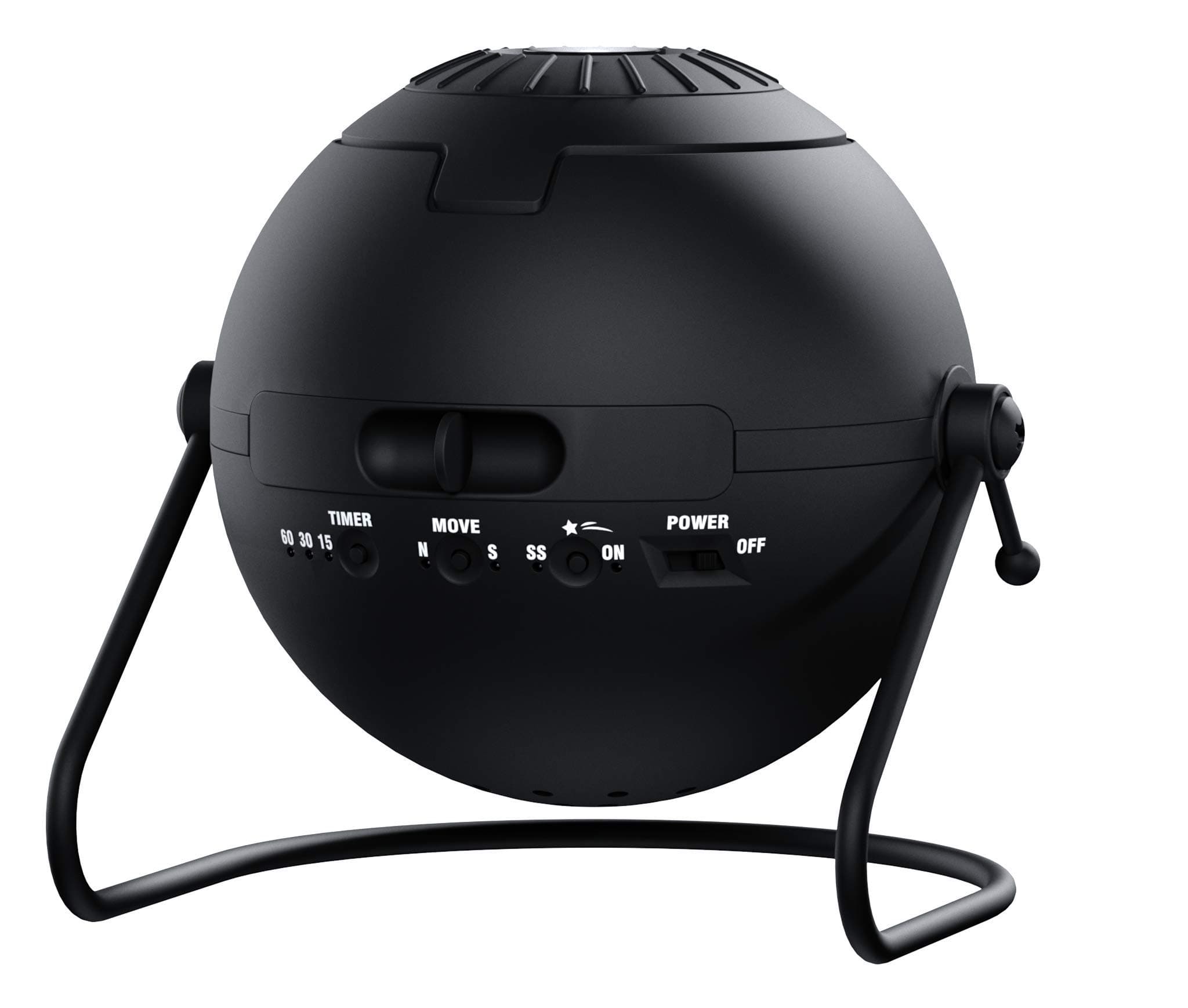
Sega Toys Homestar Flux Home Planetarium Star Projector. Check our full review for pros, cons, and verdict.
See PriceFeatured in
- Best Realistic Star Projectors 2026Best premium
- Best Premium Galaxy Projectors 2026Best realism
- Best Galaxy Projectors 2026Best home planetarium
Pros
- +Detailed and realistic starfield imagery
- +Expandable interchangeable-disc ecosystem
- +Premium design suited to adult spaces
- +Shooting-star effect and simple controls
Cons
- -Much more expensive than mood-light projectors
- -Needs a dark room for the best contrast
- -Some owners report focus or edge-softness issues
- -Disc motor noise may bother light sleepers
Our Verdict
The Homestar Flux is the specialist choice for realistic starfields and an expandable home-planetarium experience. Its price is difficult to justify for casual ambience, but serious stargazers may prefer its disc-based imagery over colorful laser and nebula effects.
Overview
The Sega Toys Homestar Flux is a premium home planetarium for buyers who care more about a realistic starfield than colorful mood lighting. It uses interchangeable projection discs, a 5-watt LED source, manual focus, and a rotating disc mechanism.
This review weighs recurring owner feedback, community discussion, independent reviews, and manufacturer product information.
What Makes It Different
Most inexpensive galaxy projectors create moving nebula colors and artificial star points. The Homestar Flux instead projects detailed starfield discs. That makes it closer to a small home planetarium than a decorative night light. Additional compatible discs expand the subjects beyond the included night-sky scenes.
The projector is designed for manual use. You adjust focus on the lens, install a disc, and start the rotation. There is no smart-home ecosystem, app, or Bluetooth speaker. That simplicity is appropriate for the product’s astronomy focus, but it feels less convenient than the Govee 2 Pro.
Image Quality
Independent reviewers and long-term owners consistently praise the starfield detail, shooting-star effect, and overall realism. The best results require a dark room and a light-colored projection surface. In a bright room, the image loses contrast and the experience becomes much less convincing.
Focus is the main variable. Some owners report a sharp image after careful adjustment, while others describe edge softness or difficulty keeping the entire projection equally focused. Room size and projector distance matter, so buyers should treat advertised coverage as a starting point rather than a guarantee.
Noise and Sleep Use
The Homestar Flux is quiet enough for many users, and several owners use it as a sleep or relaxation aid. However, the disc motor is not silent for everyone. Recent feedback includes complaints about mechanical noise during rotation, which matters if the projector will run beside a bed.
The included timer is useful, but this is not a white-noise machine and does not function as a general Bluetooth speaker. It is primarily a visual astronomy device.
Value
The Flux costs considerably more than the Northern Galaxy Light, Rossetta, and One Fire projectors. The premium is justified only if realistic star imagery, lens quality, and an expandable disc collection matter to you. For colored auroras, music, voice control, or casual bedroom ambience, a cheaper projector is more practical.
The POCOCO is the closest alternative in concept. It is smaller, rechargeable, and less expensive, while the Flux has a longer-established premium reputation and a larger ecosystem of compatible discs. That comparison should be central to a future Gadgarma roundup.
Verdict
The Homestar Flux is the specialist pick: expensive, simple, and potentially excellent for serious stargazers. It is not the best general-purpose galaxy light, but it could be the best product in a realistic home-planetarium category if hands-on testing confirms the image quality and motor noise are acceptable.
Sources consulted: Sega Homestar product line, Space review guide, Live Science guide, and YouTube review.
Compare With
Recommended Articles
Best Galaxy Projectors 2026
The top galaxy and star projectors for bedrooms, from budget nebula lights to smart projectors with Alexa and Bluetooth speakers.
Best Realistic Star Projectors 2026
The best realistic star and planetarium projectors for detailed space imagery, quiet bedrooms, and adult spaces.
Best Premium Galaxy Projectors 2026
Premium galaxy projectors compared for smart-home control, realistic imagery, large projections, and build quality.
Suggested Reads
Best Outdoor String Lights 2026
Our top picks for outdoor string lights, from budget solar options to heavy-duty commercial-grade strands for patios, decks, and backyards.
Best Peel & Stick Wallpaper 2026
Our top picks for peel and stick wallpaper, from bold florals and grasscloth textures to budget-friendly accent wall options that renters can remove without damage.
Best Cordless Cellular Shades 2026
The best no-drill cordless cellular shades and honeycomb blinds for renters and homeowners. Blackout and light filtering options that install in seconds without tools.
Best Solar Garden Lights 2026
Our top picks for solar garden lights, including pathway stakes, decorative globe lights, and firefly-style accents that charge during the day and glow all night.