Worx Landroid M 20V Robotic Lawn Mower WR147
Updated April 26, 2026
By Drew Derekshaw
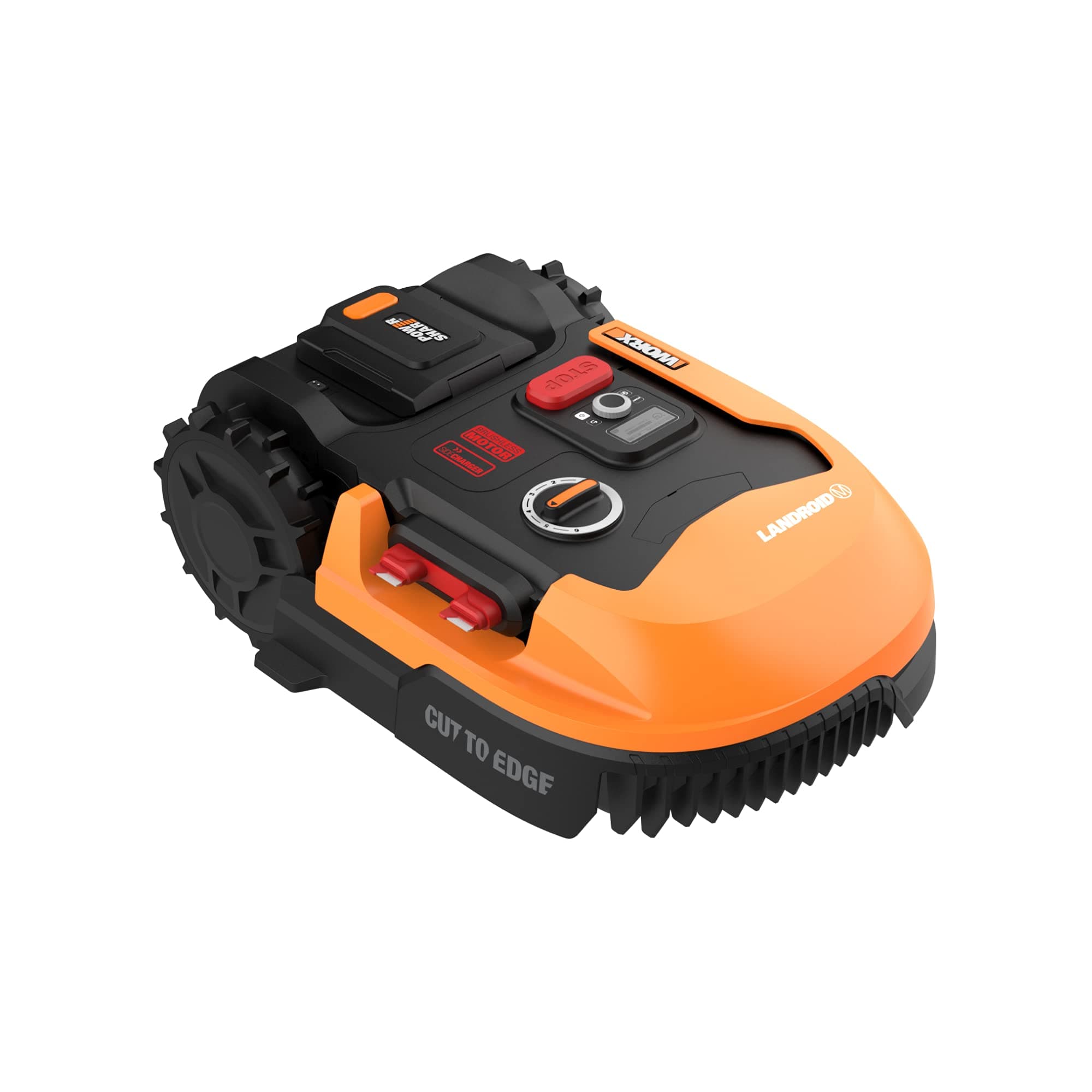
Worx Landroid M 20V Robotic Lawn Mower WR147. Check our full review for pros, cons, and verdict.
See PriceFeatured in
- Best Robot Lawn Mowers 2026Best familiar setup
Pros
- +Lowest price among name-brand robotic mowers
- +Cuts grass evenly with micro-mulching that improves lawn health over time
- +Runs at only 59-63 dB, quiet enough for nighttime mowing
- +Wi-Fi connected with Alexa and Google Assistant support
- +Power Share batteries work across 100+ Worx tools
- +Offset blade design reduces manual edge trimming by 80-90%
Cons
- -Boundary wire setup takes 2-4 hours and breaks are hard to find and fix
- -7-inch cutting width means it takes much longer to cover the yard
- -Gets stuck on slopes, debris, and uneven terrain more than expected
- -Wire-free competitors now available at similar prices
Our Verdict
The cheapest name-brand robotic mower you can buy, and it does cut grass well once properly set up. But boundary wire installation is tedious, the 7-inch cutting width is narrow, and wire-free competitors like the Segway Navimow now cost about the same. Best for flat, simple yards under a quarter acre where budget is the top priority.
Overview
The Worx Landroid M WR147 is a 20V robotic lawn mower rated for yards up to a quarter acre. It uses a boundary wire to define its mowing area, a brushless motor to drive three small spinning blades, and Wi-Fi to connect to the Landroid app for scheduling and monitoring. Bob Vila gave it an 8.9 out of 10. Robot-Lawn-Mower.net scored it 85%.
The appeal is obvious: set it up once, schedule it, and never push a mower again. The reality is more nuanced. Amazon reviewers give it 3.4 out of 5 stars (175 ratings), which is the lowest rating of any product we've reviewed. The boundary wire installation is the main pain point, and the mower struggles with slopes, debris, and complex yard layouts. When it works, it works well. Getting it to that point takes patience.
Key Features
The Landroid uses Worx's AIA (Artificial Intelligence Algorithm) navigation to find efficient mowing paths instead of purely random patterns. It cuts at heights between 1.6 and 3.5 inches using a 7-inch offset disc with three replaceable blades. The offset design lets it cut closer to edges than center-mounted blades.
It connects to Wi-Fi (2.4GHz) and the Landroid app handles scheduling, zone management, and firmware updates. The Auto Schedule feature calculates optimal mowing times based on your lawn size. Alexa and Google Assistant work for voice commands. A rain sensor sends the mower back to its charging base when it detects water.
The 20V 4.0Ah battery is part of Worx's Power Share platform, compatible with 100+ Worx tools. Runtime is roughly 60 to 120 minutes depending on conditions. Charge time is about 90 minutes. Find My Landroid GPS tracking is available as an add-on for theft protection.
Performance
When the boundary wire is installed correctly and the yard is flat and clear, the Landroid cuts well. Best Lawn Tools ran a 6-month test and found the lawn became "noticeably thicker and greener" from the micro-mulching effect of frequent small cuts. Their edge-trimming test showed the offset blade reduced manual string trimming "by about 80-90%." Bob Vila's testers confirmed it "produced a nice, even cut."
The problems start with anything beyond a simple flat rectangle. The 7-inch cutting width is narrow, so it needs to run frequently (daily or every other day) to keep up. Amazon reviewers with sweet gum balls, twigs, or rocks in their yard report the mower getting stuck repeatedly. One reviewer described finding the mower lodged against obstacles multiple times per day. Another with slopes reported the mower digging up the boundary wire when trying to turn on damp soil.
Noise is a genuine strength. At 59-63 dB, it's about as loud as a normal conversation. You can run it at night without bothering anyone. Operating cost is almost nothing: Best Lawn Tools calculated 14.56 kWh per season, meaning electricity cost for an entire year is almost nothing.
The slope rating is 20 degrees (35%), but real-world performance on slopes is worse. Owners on the Worx Landroid subreddit report traction loss on slopes after the first year as wheels wear down. The off-road wheel upgrade (WA0955) helps but shouldn't be necessary on a mower that claims slope capability.
Build Quality & Design
The mower is built decently for the price. It weighs about 25.6 lbs assembled. The blades are replaceable and should be swapped every 6-8 weeks for the best cut, though every 3-4 months is acceptable. Family Handyman noted blade changes take about 2 minutes with the included hex key.
The 3-year warranty is shorter than EGO's 5-year and Husqvarna's 5-year warranties. Customer support gets mixed reports. Some owners had smooth warranty experiences, while others on forums report 5+ month repair wait times.
The boundary wire is the weak point of the whole system. It ships with 590-820 feet of wire and 250-340 pegs (quantities vary by listing). Family Handyman found the pegs needed to be placed every foot, not every 2-3 feet as the instructions suggest. Wire breaks happen, and finding the break in a buried or pegged-down wire is frustrating. Amazon reviewers report wire snapping multiple times in the first weeks.
Value for Money
The WR147 is the cheapest name-brand robotic mower you can buy. Husqvarna Automowers start around double the price. The Mammotion LUBA 2 costs three to four times as much. The EcoFlow Blade is about four times the price.
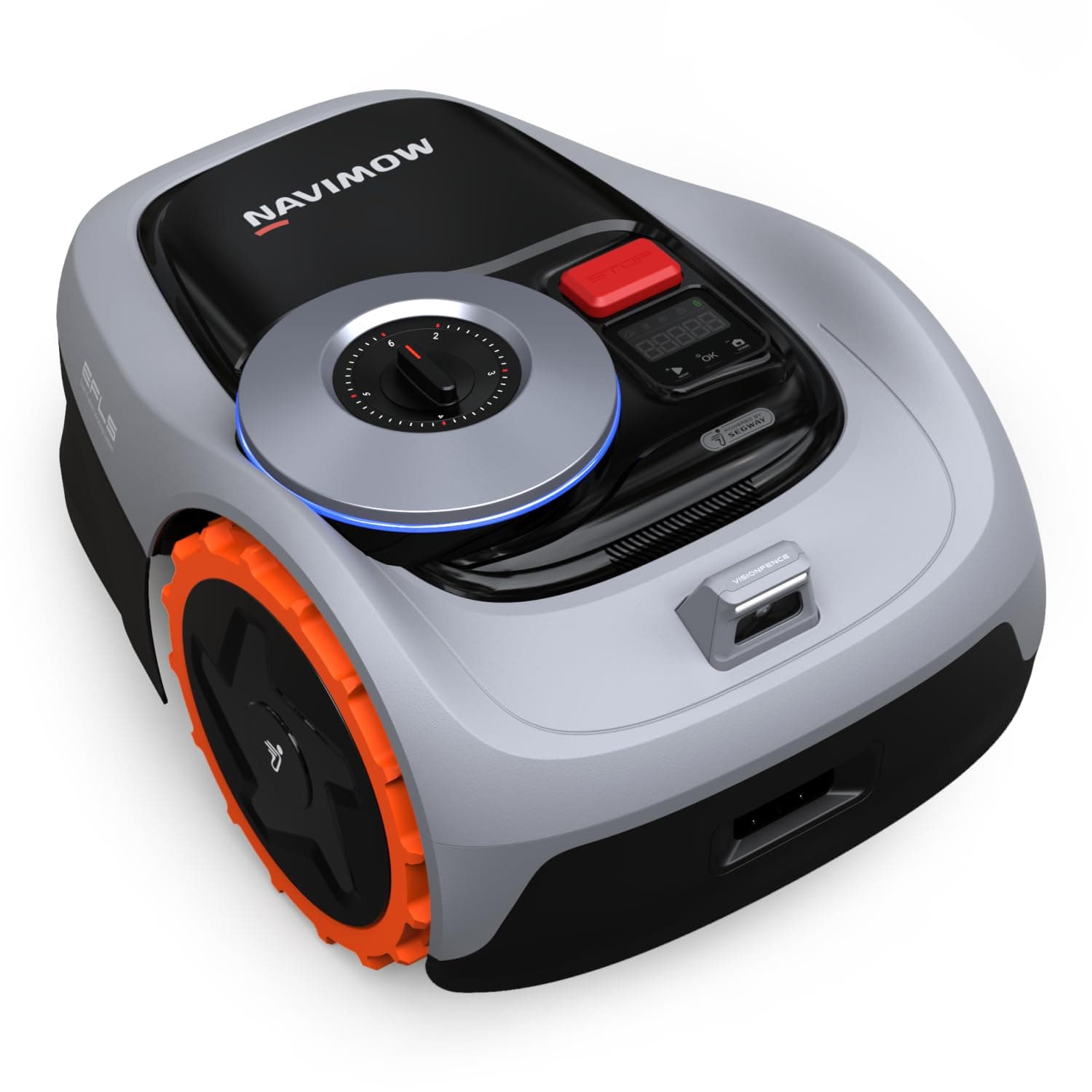
But the value calculation has changed in the last couple years. The Segway Navimow i105N/i110N is wire-free (using RTK GPS instead of a boundary wire) and costs only a bit more. Setup takes 30 minutes instead of 3-4 hours. No wire to break, no pegs to hammer in, no wire to accidentally cut with a shovel later. That's a big deal.
Worx also sells a lot of accessories: an Anti-Collision System, a garage cover, GPS tracking, and off-road wheels. A full kit of accessories can add 50-75% to the base price.
Bob Vila makes a fair point that the mower pays for itself in one season compared to professional lawn service. That math checks out. But you're also trading mowing time for boundary wire maintenance and troubleshooting time.
Who Should Buy This
People with small, flat, simple yards (under a quarter acre) who want the cheapest way into robotic mowing. If your yard is a basic rectangle or square with no major slopes, few trees, and no debris, the Landroid will do a good job.
Homeowners already in the Worx Power Share ecosystem. The shared 20V batteries add value if you own other Worx tools.
Anyone who absolutely wants to stop mowing and has the patience for the initial setup and occasional troubleshooting.
Who Should Skip This
If your yard has slopes, complex shapes, lots of trees, or debris like pine cones or seed pods, the Landroid will frustrate you. The getting-stuck reports from Amazon and Reddit are consistent and credible.
If you want easy setup, look at wire-free alternatives. The Segway Navimow costs a bit more but eliminates the boundary wire entirely. You walk it around your perimeter once and it maps the yard with GPS. That's dramatically simpler.
If your yard is over a quarter acre, this mower is too small. The 7-inch cutting width and limited battery mean it already struggles to keep up with a full quarter-acre. Look at the Husqvarna Automower 430X or Mammotion LUBA for larger properties.
Compare With
Recommended Articles
Best Outdoor String Lights 2026
Our top picks for outdoor string lights, from budget solar options to heavy-duty commercial-grade strands for patios, decks, and backyards.
Best Solar Garden Lights 2026
Our top picks for solar garden lights, including pathway stakes, decorative globe lights, and firefly-style accents that charge during the day and glow all night.
Best Robot Lawn Mowers 2026
Robot lawn mowers compared for wire-free setup, navigation, terrain, quiet operation, and lawn size.
Best Mini Gardens 2026
Mini gardens compared for countertop growing, herbs, small harvests, automation, and easy indoor planting.
Suggested Reads
Best Galaxy Projectors 2026
The top galaxy and star projectors for bedrooms, from budget nebula lights to smart projectors with Alexa and Bluetooth speakers.
Best Peel & Stick Wallpaper 2026
Our top picks for peel and stick wallpaper, from bold florals and grasscloth textures to budget-friendly accent wall options that renters can remove without damage.
Best Cordless Cellular Shades 2026
The best no-drill cordless cellular shades and honeycomb blinds for renters and homeowners. Blackout and light filtering options that install in seconds without tools.
Best Realistic Star Projectors 2026
The best realistic star and planetarium projectors for detailed space imagery, quiet bedrooms, and adult spaces.